

Key Takeaways
- Judges and juries evaluate high-stakes cases and business disputes through very different lenses.
- Technical arguments that persuade a judge can lose a jury without careful simplification.
- Credibility often decides more than the volume of evidence a party presents.
- Documents created before the dispute arose outweigh testimony prepared after it.
- Strong trial strategy prepares for both audiences from the first pleading forward.
Business disputes rarely reach a courtroom. Most resolve through negotiation, mediation, or dispositive motions. The matters that do reach trial tend to be the ones carrying the most exposure. When a single verdict can determine whether a company survives, the identity of the decision maker matters enormously.
Judges and juries are both exposed to facts. They are not, however, the same audience. Each brings different training, different constraints, and different instincts to a commercial case. Understanding those differences shapes nearly every strategic decision a trial team makes.
What Makes a Business Case High-Stakes
A large dollar figure alone does not create a high-stakes case. A claim becomes company-defining when an adverse outcome threatens the enterprise itself. That threat takes several forms. It may be a damages number exceeding available insurance and reserves, or an injunction halting a core revenue line. It may be a ruling that voids a critical contract or shifts ownership control.
Bet-the-company litigation carries a second characteristic. The dispute usually involves the people who built the business. Founders, partners, and long-tenured executives sit at the center of the facts. Their conduct becomes evidence. Their memories become testimony. That personal dimension changes how both judges and juries receive the case.

How Judges Approach Complex Commercial Disputes
A judge reads the file. That single fact separates bench decision-making from jury decision-making. Judges see the pleadings, the motion practice, the deposition excerpts, and the expert reports. They form impressions long before opening statements begin.
Judges are also trained to apply the law. A commercial litigation attorney arguing to the bench can rely on statutory text, contract construction principles, and appellate authority. Technical arguments land. A judge will follow a chain of reasoning across several steps without losing patience.
That comfort with complexity carries a cost. Judges tend to discount emotional framing. A narrative about betrayal between partners carries less weight than the operating agreement language itself. Judges also watch for consistency. A position taken in an early motion will be remembered if it shifts later.
Docket pressure shapes the bench as well. Judges manage hundreds of matters simultaneously. Clarity and economy earn credibility. Overlong briefing and unnecessary discovery fights spend it.
What Juries Actually Hear in a Business Trial
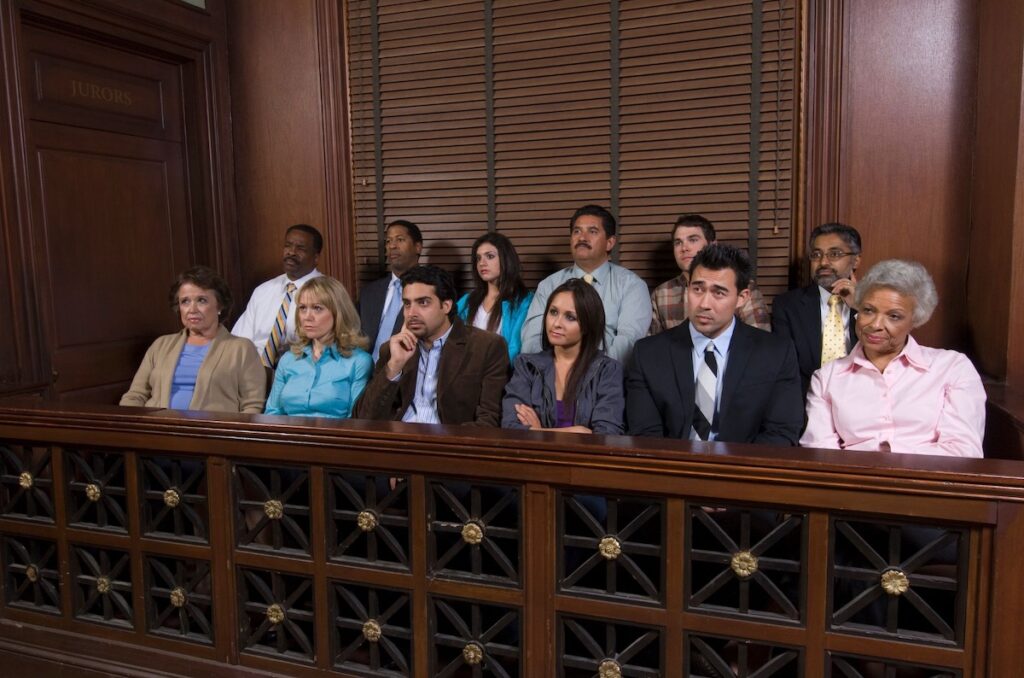
Jurors arrive with no file. They learn the case in real time, through witnesses and exhibits presented in an order chosen by counsel. Whatever the trial team fails to explain simply will not be understood.
Most jurors have never negotiated an indemnification clause or reviewed a capitalization table. They have, however, made agreements. They have been treated fairly or unfairly by an employer, a contractor, or a business partner. Those experiences supply the framework they use.
That framework rewards fairness narratives. Juries want to know who kept a promise and who broke one. They want to know who told the truth. A technically correct position that appears unfair faces real risk before a jury.
Juries also respond to proportionality. A large company pursuing a small counterparty invites skepticism. A smaller company pursuing a much larger one invites sympathy. Neither instinct is legally relevant. Both are entirely real.
The Credibility Test Both Audiences Apply
Credibility is the one currency that spends equally with judges and juries. Both decide early whether a witness is trustworthy. Once that judgment forms, it colors everything else the witness says.
Executives often make difficult witnesses. Habits that serve a leader in business can undermine that same leader on the stand. Deflection, qualification, and control of the conversation all read poorly. Preparation matters far more than natural talent here.
The most damaging credibility problem is the small and unnecessary denial. A witness who disputes a fact contradicted by an email loses standing on every larger question. Conceding minor points preserves authority on the major ones.
Why Contemporaneous Documents Carry Extraordinary Weight
Documents created before a dispute arose hold a persuasive power that testimony cannot match. They were written without litigation in mind. Both judges and juries recognize that distinction instinctively.
An email sent two years before the lawsuit will often outweigh a carefully prepared explanation offered at trial. Board minutes, internal projections, and text messages regularly decide cases. Business litigation frequently turns on what people wrote when they believed no one was watching.
This reality has a practical consequence. Document retention discipline and everyday communication habits shape litigation outcomes long before litigation begins. Sound counsel addresses those habits during ordinary operations, not after a complaint arrives.

How Each Audience Views Damages
Judges scrutinize methodology. An expert model must rest on admissible data and an accepted method. A judge will examine the assumptions, test the causal chain, and exclude speculative components.
Juries scrutinize reasonableness. A number that seems inflated damages the party asking for it. Jurors have been known to reduce an otherwise strong claim because the demand felt excessive. Restraint in the damages presentation often increases the actual recovery.
The safest approach satisfies both audiences. A damages theory should be methodologically defensible and intuitively fair. Those two requirements do not conflict. They simply demand different forms of proof.
The Risk of Overcomplicating the Story
Complex commercial disputes generate enormous records. Trial teams sometimes mistake volume for strength. A case built on forty exhibits and three clear themes usually outperforms one built on four hundred.
Judges reward discipline because it saves time. Juries reward discipline because it aids comprehension. Simplification is not a concession of weakness. It is the work of identifying which facts actually decide the dispute.

Building a Case for Two Audiences at Once
Most commercial matters are prepared without certainty about the ultimate audience. A business dispute attorney must therefore prepare for both possibilities from the outset.
That dual preparation shows up in specific choices. Deposition questions should generate clean video clips and clean transcript passages. Exhibit selection should support both a written brief and a visual presentation. Themes should survive translation between technical and plain language.
Early case assessment supports all of that work. Identifying the three or four facts that will decide the case allows every later decision to serve them. Discovery narrows. Motions sharpen. Settlement posture improves measurably.
What Business Owners Should Take From This
Litigation outcomes are not determined by the merits alone. They are determined by how those merits are received. Judges receive a case through doctrine, record, and consistency. Juries receive it through fairness, credibility, and clarity.
Companies facing enterprise-threatening claims should ask counsel one direct question. How does this case look to each audience? A trial team that answers with specificity has done the necessary work.
RichardsonClement, P.C., represents businesses in high-stakes commercial disputes where the outcome can define the company. Richardson prepares every matter for both the bench and the jury from the first day forward. Contact the firm to discuss your situation with experienced business litigation counsel.
Frequently Asked Questions
Most business disputes never reach trial. Among those that do, the fact finder depends on the claims asserted and the governing contract terms. A proper jury demand also controls.
The term describes a dispute where an adverse result threatens the survival of the business. The threat may come from damages exposure, injunctive relief, or loss of ownership control.
Juries understand what is explained clearly. Comprehension depends on the trial team more than on the jurors. Simple themes and strong documents make complicated facts accessible.
Documents created before the dispute arose usually carry the greatest weight. Emails, minutes, and internal reports written without litigation in mind persuade both judges and juries.
Before the dispute escalates. Early involvement protects privilege, preserves records, and shapes the communications that later become evidence at trial.
This information is for general informational purposes only and does not constitute legal advice, nor does it create an attorney-client relationship. You should not act or refrain from acting based on this information without first seeking qualified legal counsel.